Native Ruby gems with Rust
Please ask questions 🙋
(or share your knowledge)
N'hésitez pas à poser vos questions en français
Bonjour Hi

Ruby: 2009
Rust: 2017
Context
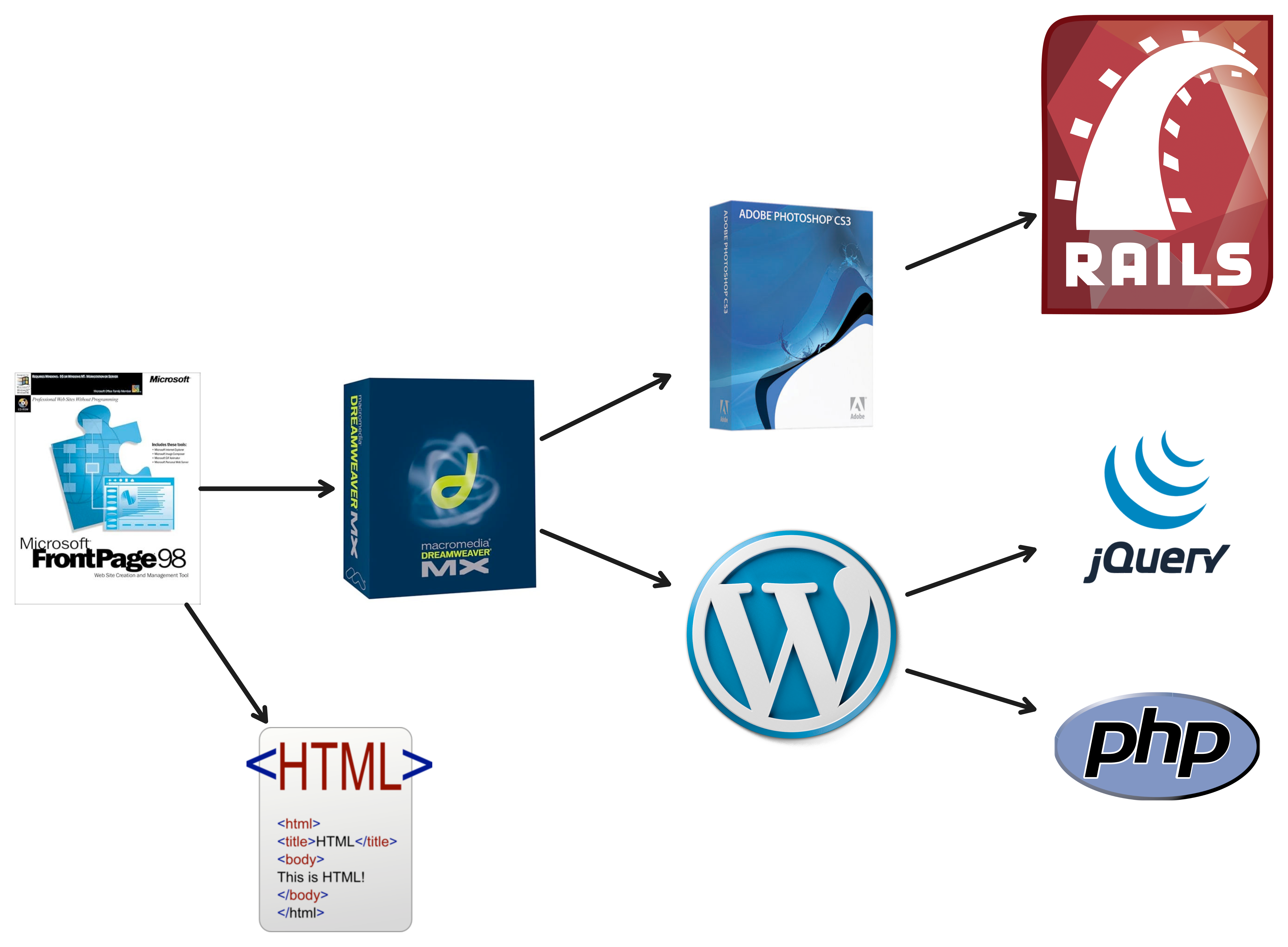



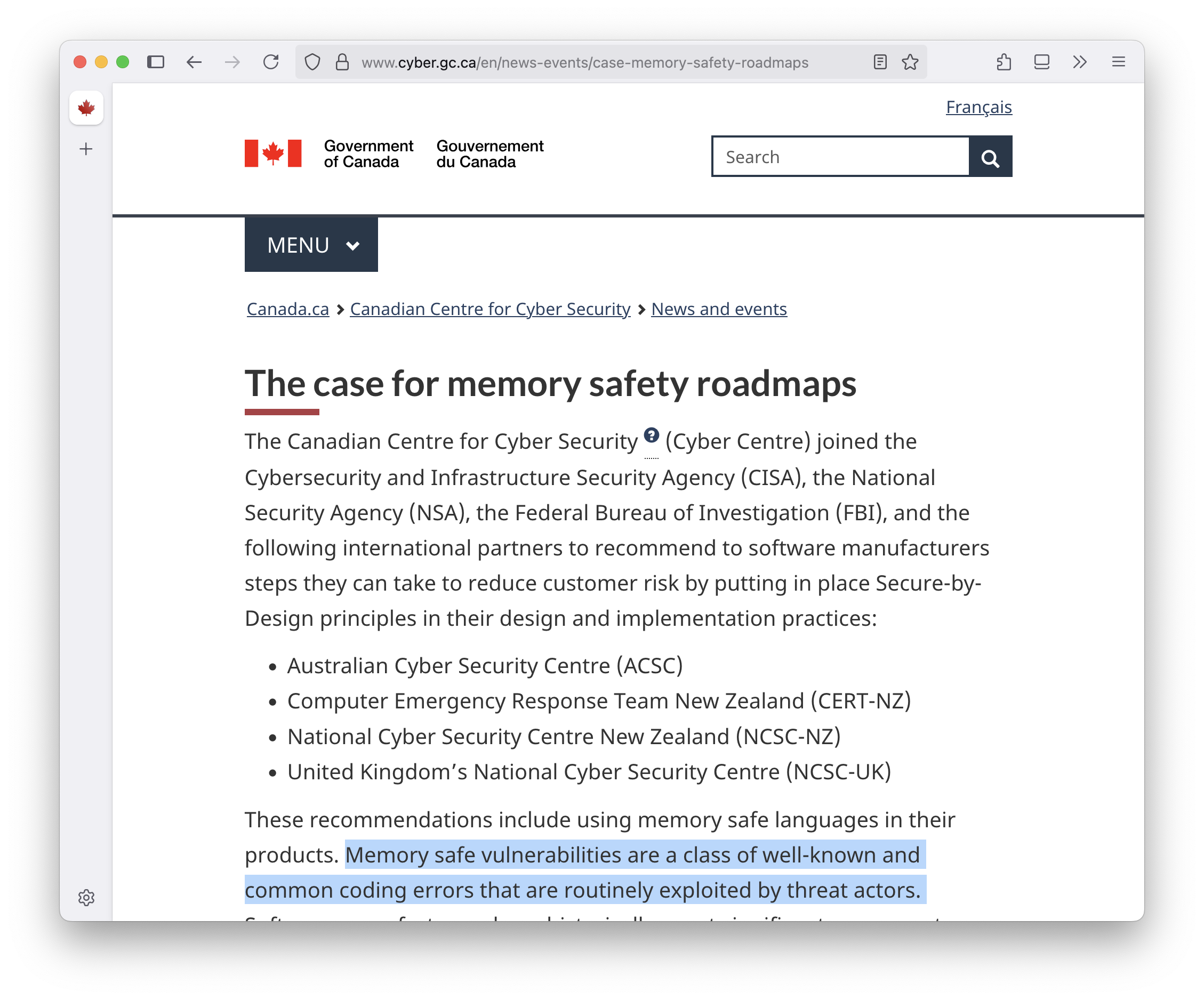
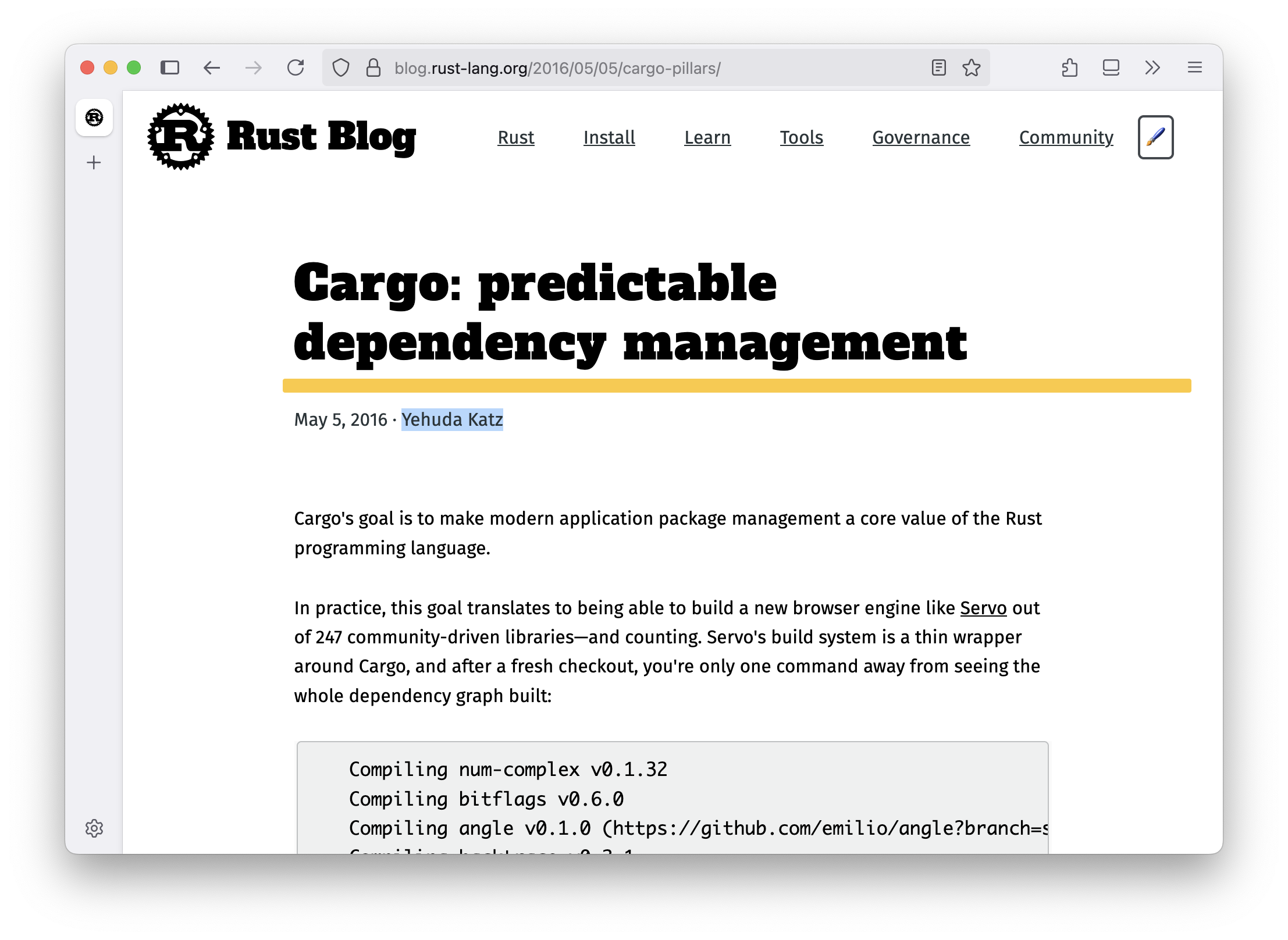
In 2015-2017 a lot of folks from the Ruby community started talking about Rust
- Yehuda Katz - Turbo Rails with Rust
- Steve Klabnik - Rust for Rubyists
- Sage Griffin - Type System Tips for the Real World
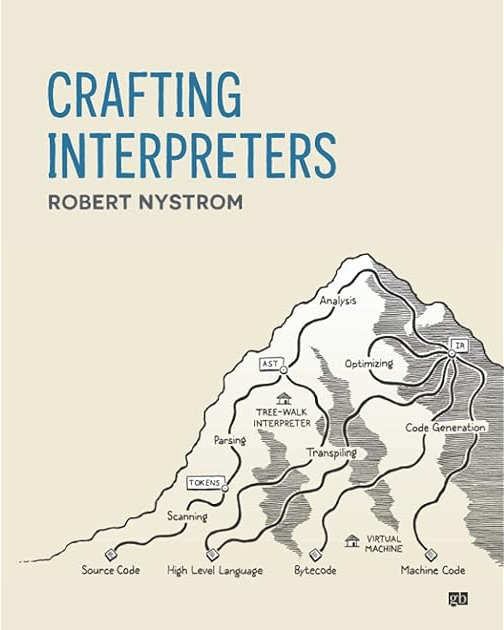
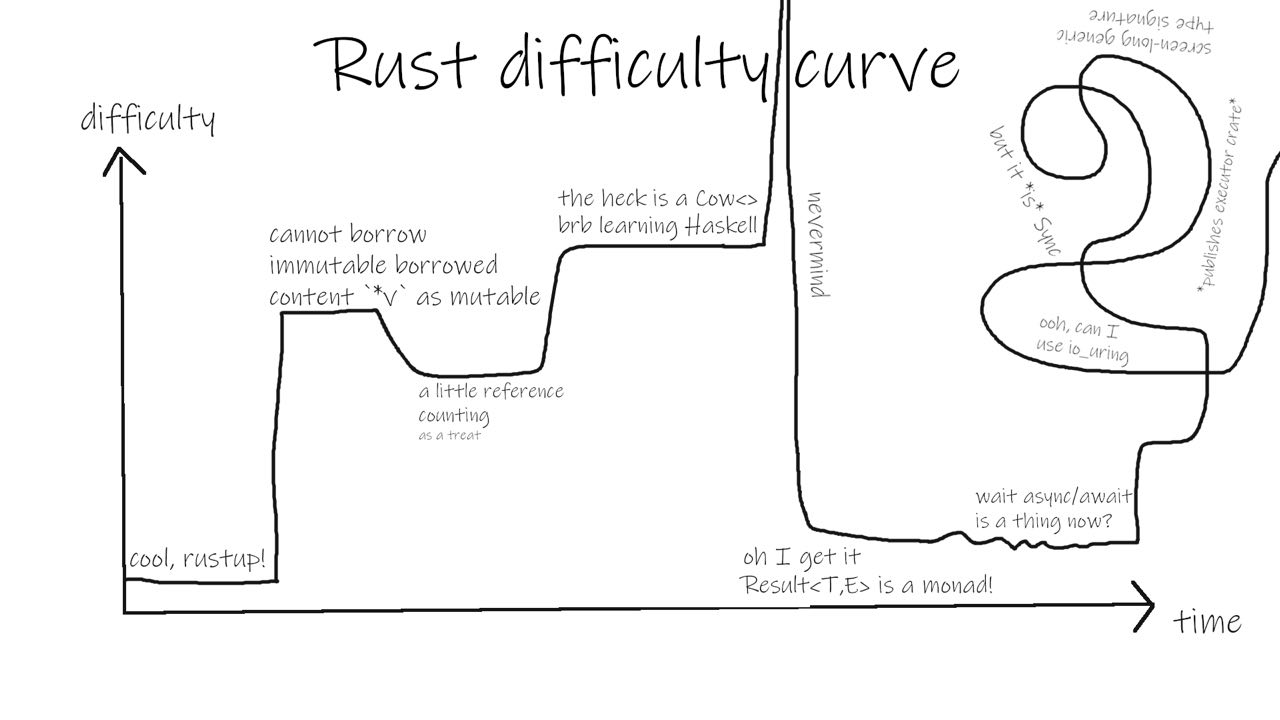
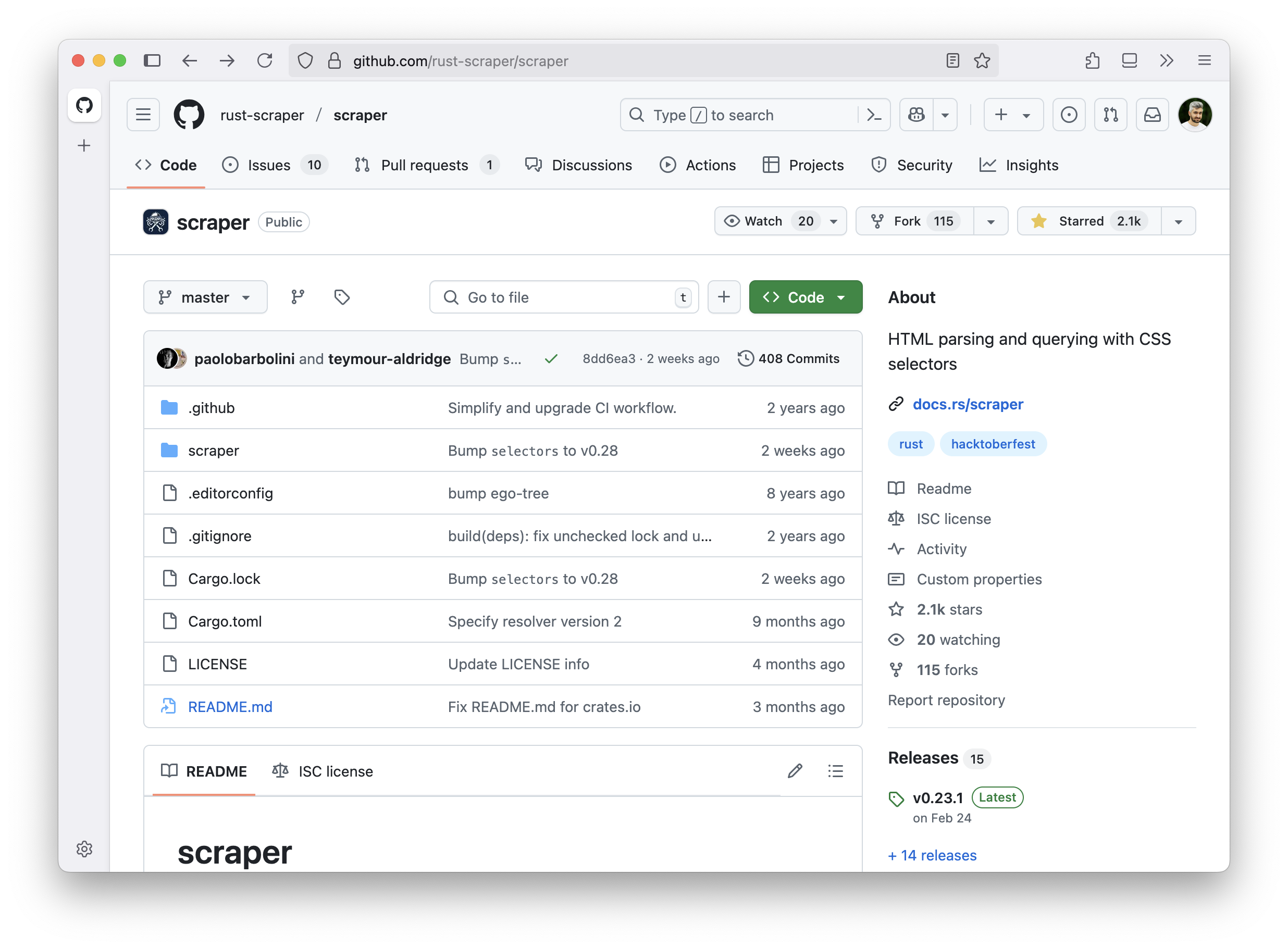
What we will cover
- How
/usr/bin/rubyworks - Native extensions and how to build them
- Why you might want to consider Rust
- Making Ruby talk to Rust
- Getting started (with a live demo 🤞)
- Additional considerations
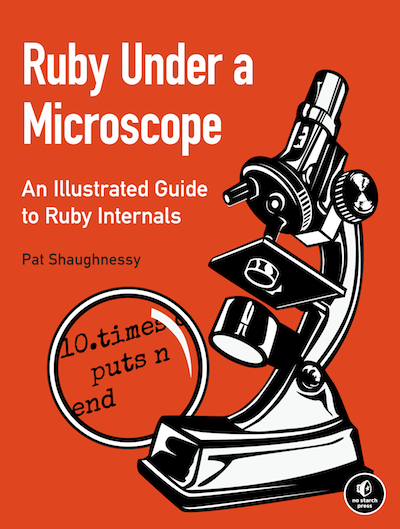
Ruby Under a Fisheye Lens
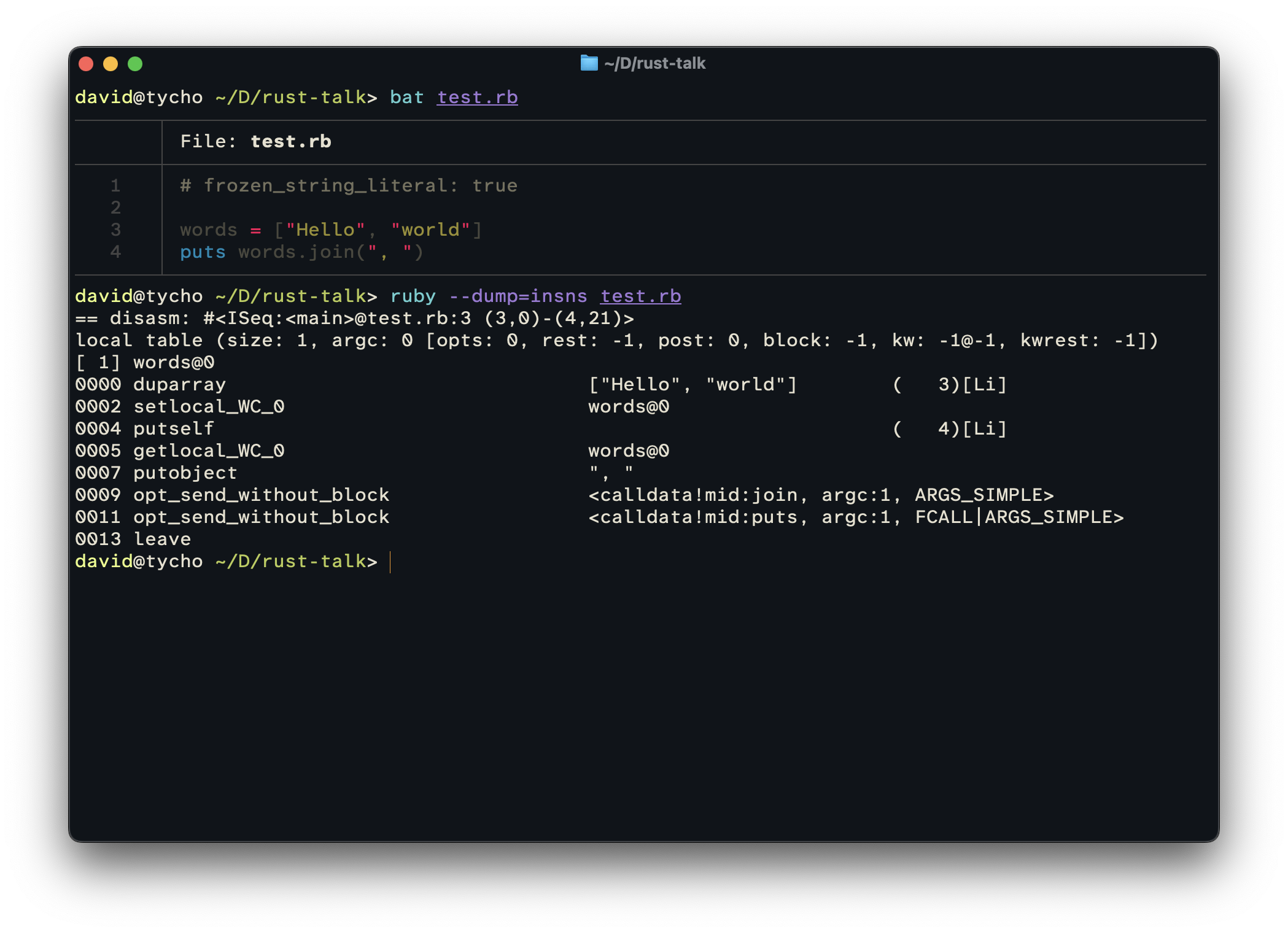
/* Set a local variable (pointed to by 'idx') as val.
     'level' indicates the nesting depth from the current block.
 */
DEFINE_INSN
setlocal
(lindex_t idx, rb_num_t level)
(VALUE val)
()
{
    vm_env_write(vm_get_ep(GET_EP(), level), -(int)idx, val);
    RB_DEBUG_COUNTER_INC(lvar_set);
    (void)RB_DEBUG_COUNTER_INC_IF(lvar_set_dynamic, level > 0);
}
static VALUE
vm_exec_core(rb_execution_context_t *ec)
{
    register rb_control_frame_t *reg_cfp = ec->cfp;
    rb_thread_t *th;

    while (1) {
        reg_cfp = ((rb_insn_func_t) (*GET_PC()))(ec, reg_cfp);

        if (UNLIKELY(reg_cfp == 0)) {
            break;
        }
    }
ruby_value_type {
    RUBY_T_NONE     = 0x00, /**< Non-object (swept etc.) */

    RUBY_T_OBJECT   = 0x01, /**< @see struct ::RObject */
    RUBY_T_CLASS    = 0x02, /**< @see struct ::RClass and ::rb_cClass */
    RUBY_T_MODULE   = 0x03, /**< @see struct ::RClass and ::rb_cModule */
    RUBY_T_FLOAT    = 0x04, /**< @see struct ::RFloat */
    RUBY_T_STRING   = 0x05, /**< @see struct ::RString */
    RUBY_T_REGEXP   = 0x06, /**< @see struct ::RRegexp */
    RUBY_T_ARRAY    = 0x07, /**< @see struct ::RArray */
    RUBY_T_HASH     = 0x08, /**< @see struct ::RHash */
    RUBY_T_STRUCT   = 0x09, /**< @see struct ::RStruct */
    RUBY_T_BIGNUM   = 0x0a, /**< @see struct ::RBignum */
    RUBY_T_FILE     = 0x0b, /**< @see struct ::RFile */
    // ...
VALUE
rb_obj_as_string(VALUE obj)
{
    VALUE str;

    if (RB_TYPE_P(obj, T_STRING)) {
        return obj;
    }
void
rb_gc_mark_children(void *objspace, VALUE obj)
{
    struct gc_mark_classext_foreach_arg foreach_args;

    if (FL_TEST_RAW(obj, FL_EXIVAR)) {
        rb_mark_generic_ivar(obj);
    }

    switch (BUILTIN_TYPE(obj)) {
      case T_FLOAT:
      case T_BIGNUM:
      case T_SYMBOL:
        /* Not immediates, but does not have references and singleton class.
         *
         * RSYMBOL(obj)->fstr intentionally not marked. See log for 96815f1e
         * ("symbol.c: remove rb_gc_mark_symbols()") */
        return;
What does this get us? ✨
- Memory safety (for Ruby code)
- Hot code reloading / no compilation step
- Runtime metaprogramming
- Duck-typing
- Portability
- "Everything is an Object"
Why native extensions?
Performance
pez.github.io/languages-visualizations/
Other languages benefit from reduced overhead, greater memory efficiency, or parallelism (e.g. polars)
Interoperability
- Platform functionality (e.g. OS features, GUI toolkits)
- Access to libraries with C/C++ APIs (e.g.
openssl,libpq)
| Spawn processes | Fiddle/FFI | Native extensions | |
|---|---|---|---|
| Chromium, GraphicsMagick | LibUI, fluentd | Nokogiri, ruby-vips, pg | |
| Pros | Strong isolation Straightforward* |
Direct access to C APIs Dynamic |
Deeper integration |
| Cons | Overhead IPC |
Overhead Trickier with complex APIs |
More ceremony |
How do native extensions work?
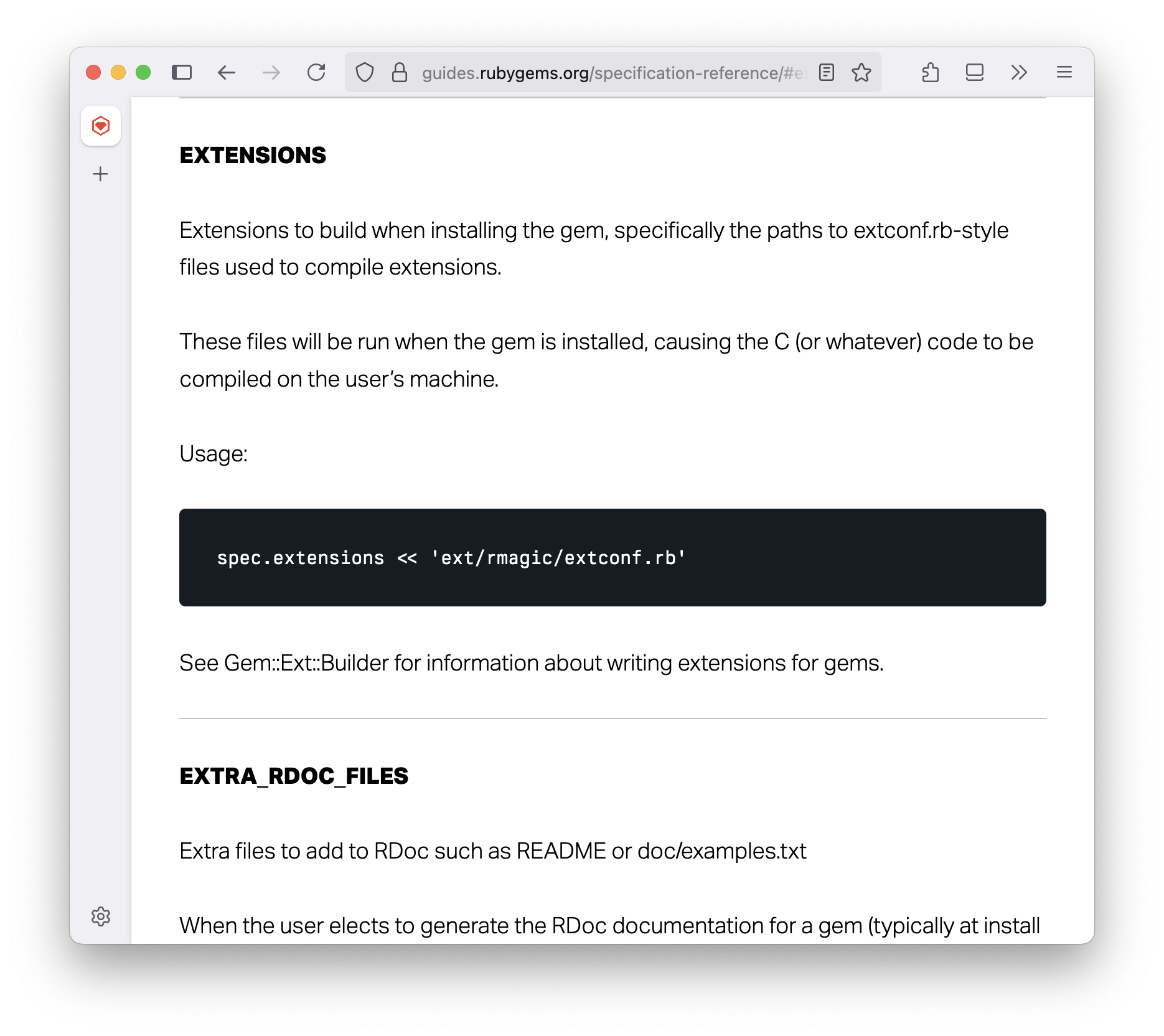
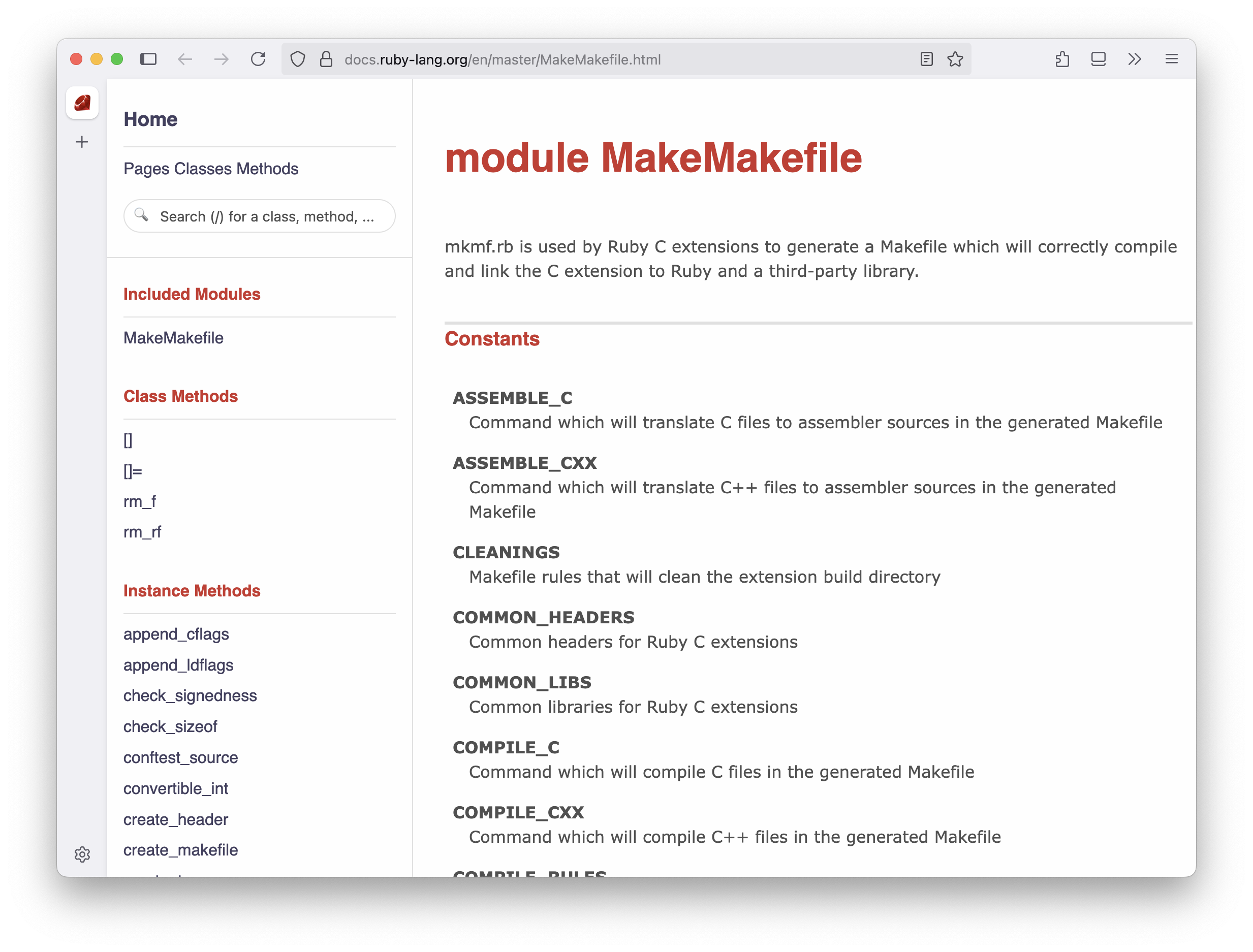
/*
 *  call-seq:
 *     require(name)    -> true or false
 *
 *  Loads the given +name+, returning +true+ if successful and +false+ if the
 *  feature is already loaded.
 *
 *  [...]
 *
 *  If the filename has the extension ".rb", it is loaded as a source file; if
 *  the extension is ".so", ".o", or the default shared library extension on
 *  the current platform, Ruby loads the shared library as a Ruby extension.
 *
 * [...]
 */
static void *
dln_load_and_init(const char *file, const char *init_fct_name)
{
#if defined(_WIN32) || defined(USE_DLN_DLOPEN)
    void *handle = dln_open(file);

#ifdef RUBY_DLN_CHECK_ABI
    typedef unsigned long long abi_version_number;
    abi_version_number binary_abi_version =
        dln_sym_callable(abi_version_number, (void), handle, EXTERNAL_PREFIX "ruby_abi_version")();
    if (binary_abi_version != RUBY_ABI_VERSION && abi_check_enabled_p()) {
        dln_loaderror("incompatible ABI version of binary - %s", file);
    }
#endif

    /* Call the init code */
    dln_sym_callable(void, (void), handle, init_fct_name)();
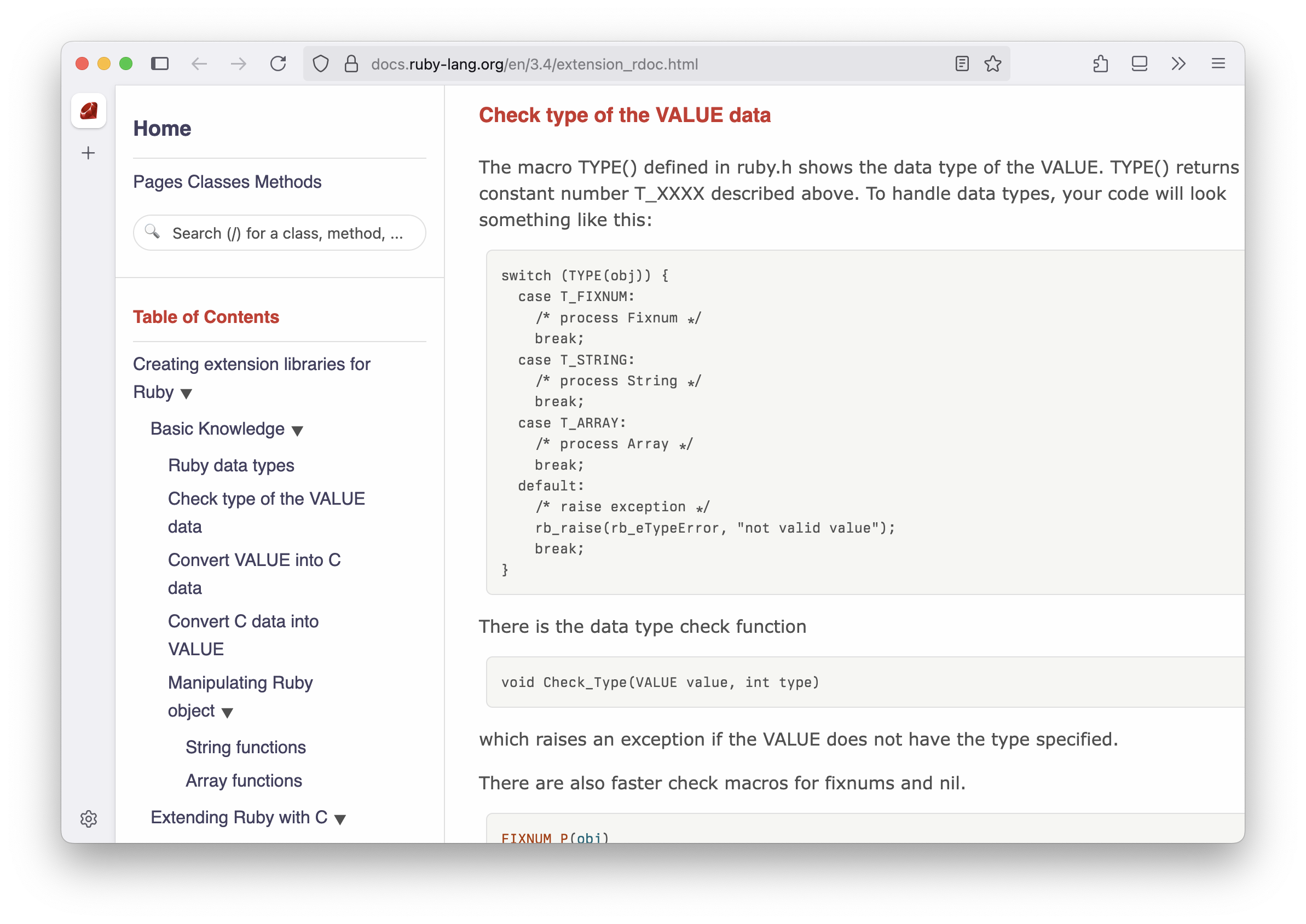
Ruby's C API
/**
 * Defines a method.
 *
 * @param[out]  klass  A module or a class.
 * @param[in]   mid    Name of the function.
 * @param[in]   func   The method body.
 * @param[in]   arity  The number of parameters.  See @ref defmethod.
 * @note        There are in fact 18 different prototypes for func.
 * @see         ::ruby::backward::cxxanyargs::define_method::rb_define_method
 */
void rb_define_method(VALUE klass, const char *mid, VALUE (*func)(ANYARGS), int arity);
Packaging
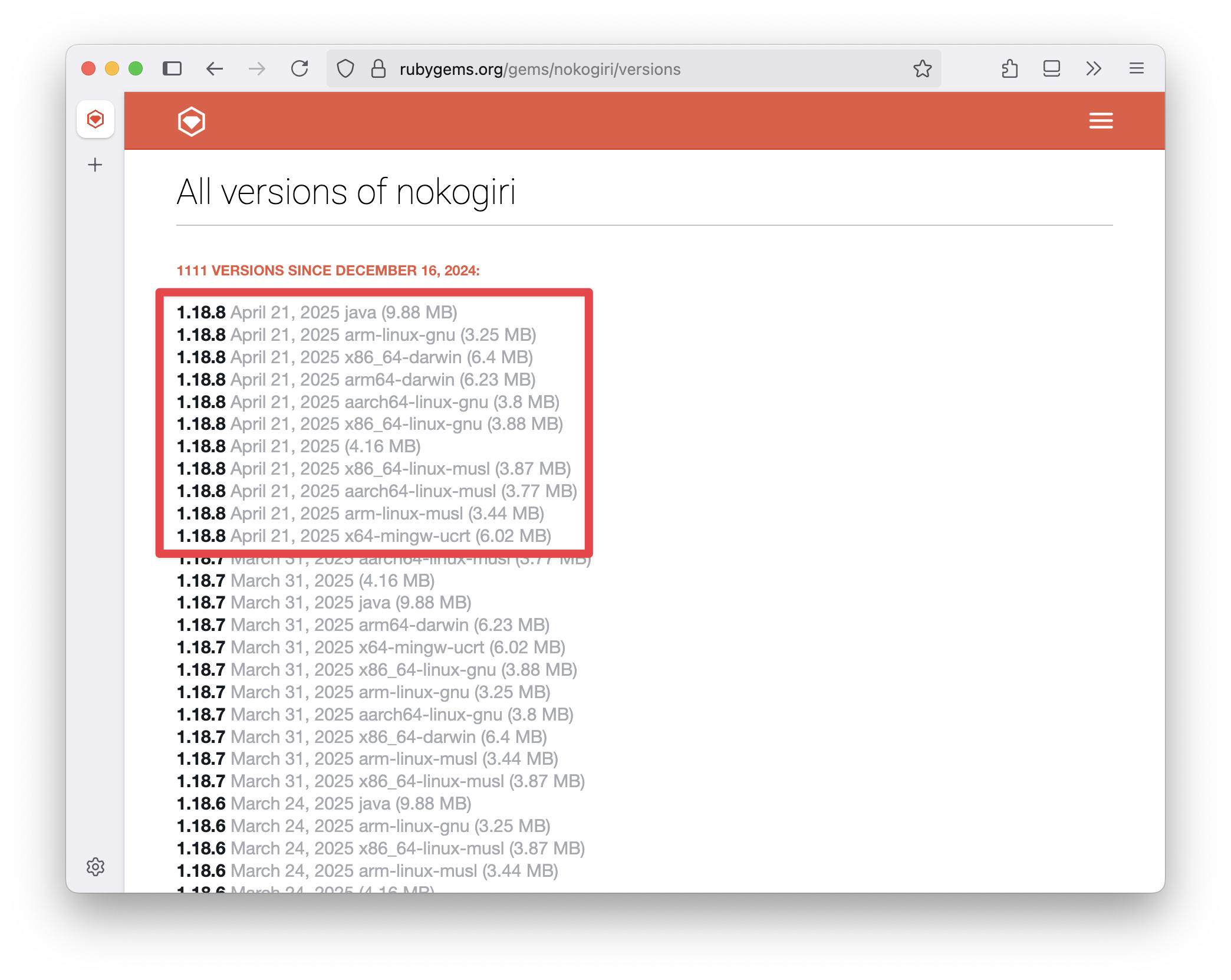
Source gem
Ship the source code and build the extension on install
- Smaller
.gem - Easier publishing process
- Requires a toolchain (e.g. GCC/clang) to install
Platform-specific gem
Ship a pre-built binary blob
- Quicker installs
- No toolchain needed
- Binary blobs ☢️
Not mentioned
- Vendoring vs. using OS-provided libraries (e.g. via
apt) - Static vs. Dynamic linking
Why Rust? 🦀
- Advantages of a low-level language (e.g. no GC, no runtime, C interop)
- The type system, type inference, and the standard library's design can make code feel surprisingly high-level (see
Iterator) - Memory safety and strong typing push a lot of issues to compile time (e.g.
NoMethodErroris not a thing) - Bundler-like package manager (
cargo) and ecosystem (see lib.rs, docs.rs)
Momentum
- Ruby (YJIT/ZJIT)
- Linux kernel
- Windows kernel
- AWS S3 / Firecracker
- Language tooling (SWC, Astral)
- Apps (1Password, Zed, Signal, Matrix)
Ruby 🤝 Rust
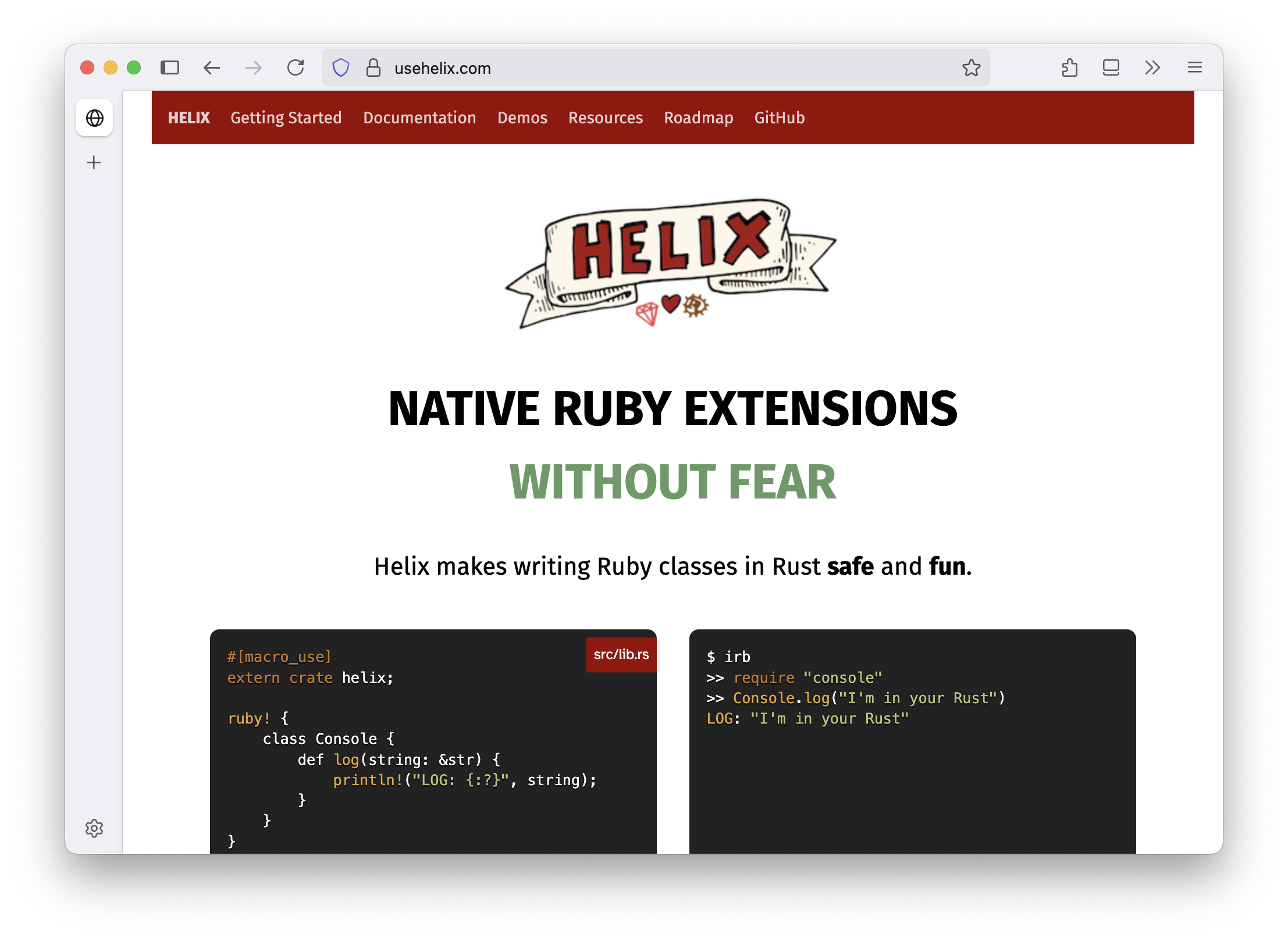
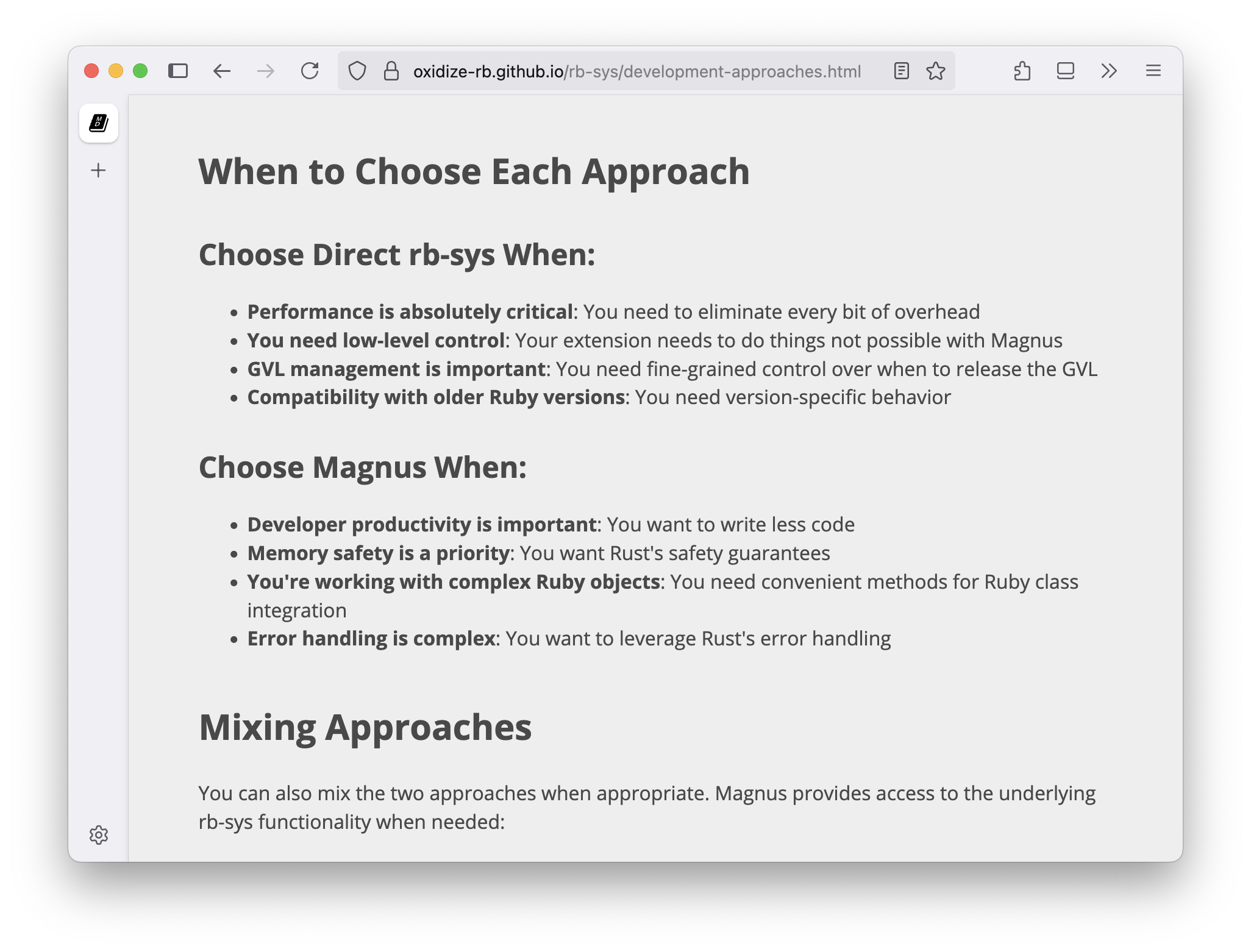
oxidize-rb/rb-sys
- Auto-generated low-level bindings to
ruby.h(via bindgen) - Ruby gem to make Rust extensions work with Rake and
extconf.rb - Cross-compilation tooling
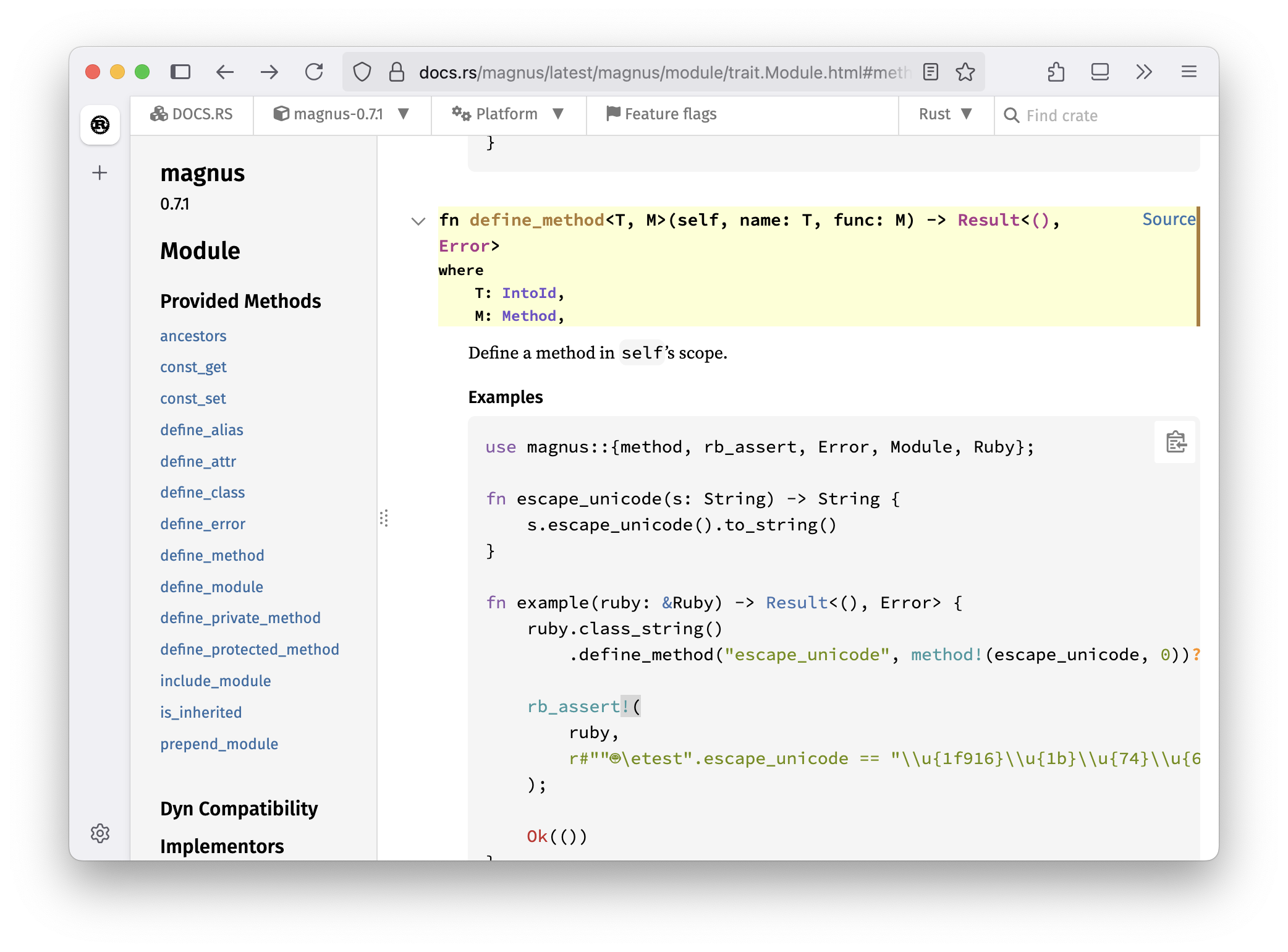
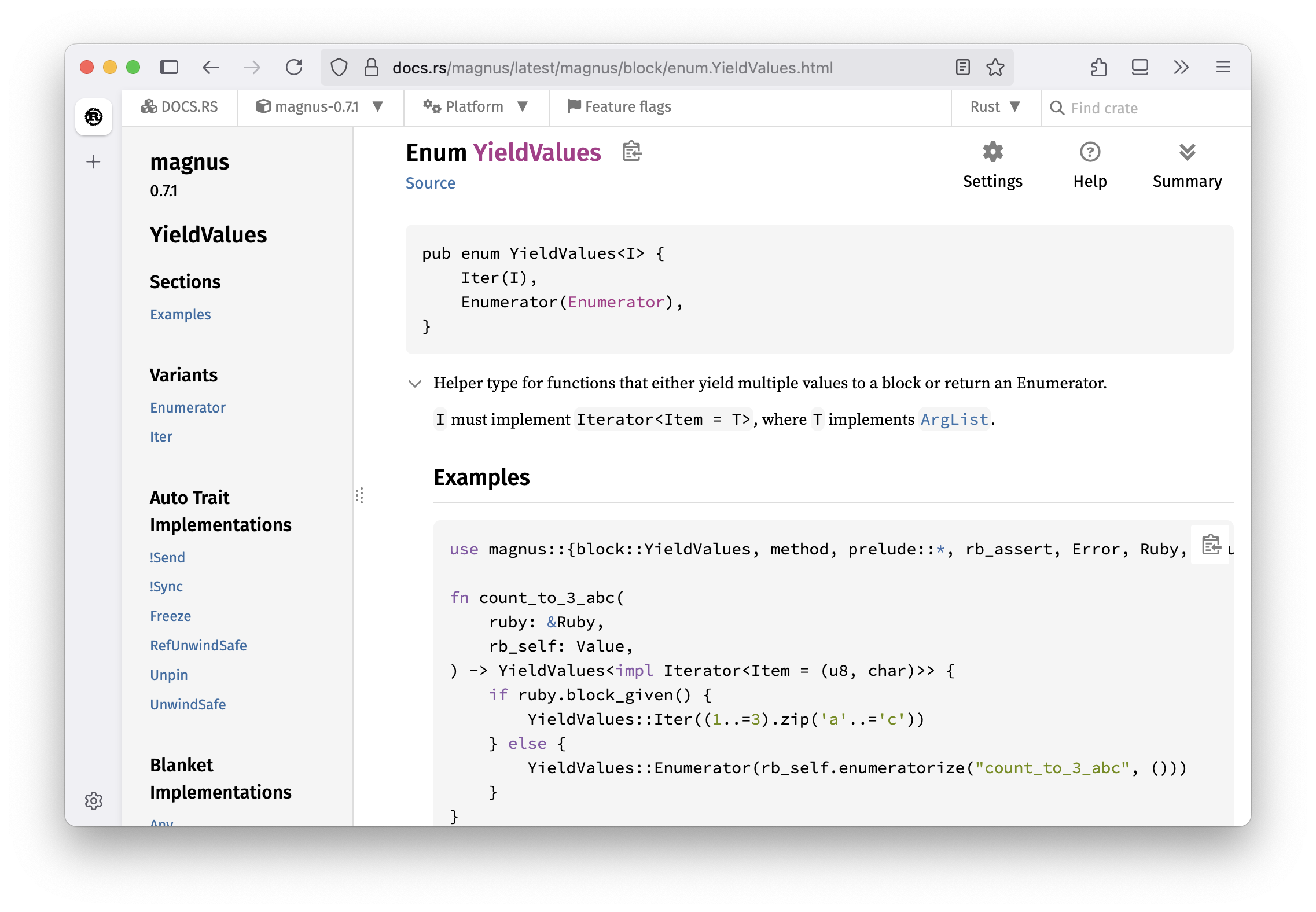
matsadler/magnus
- Friendlier/safer wrapper on top of
rb-sys - Macros, traits, and other niceties to make interoperability easier (e.g. manipulating Ruby objects from Rust, passing Rust types back to Ruby)
Getting started
bundle gem hello_rust --ext rust
Additional considerations
Mapping to OOP APIs
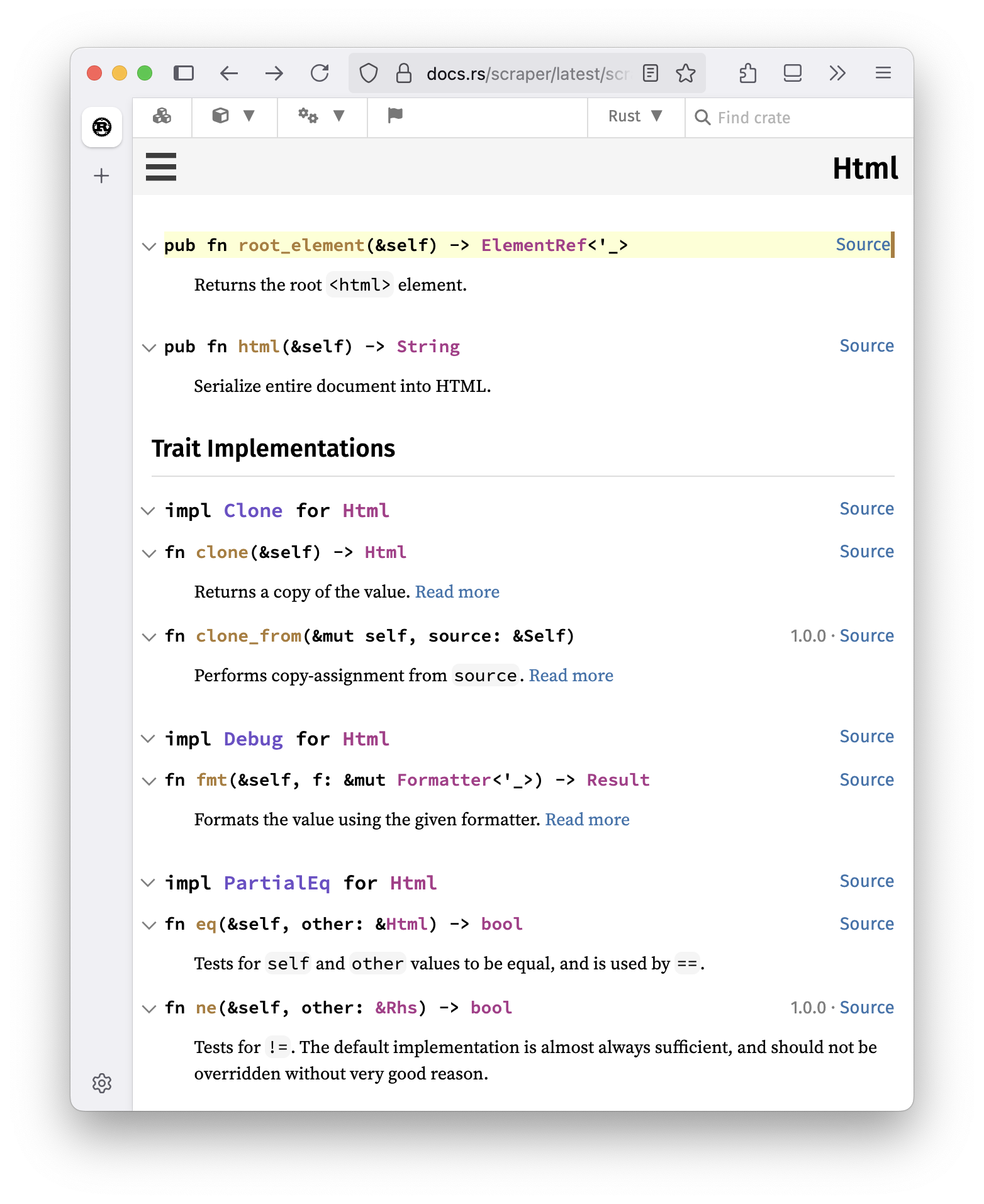
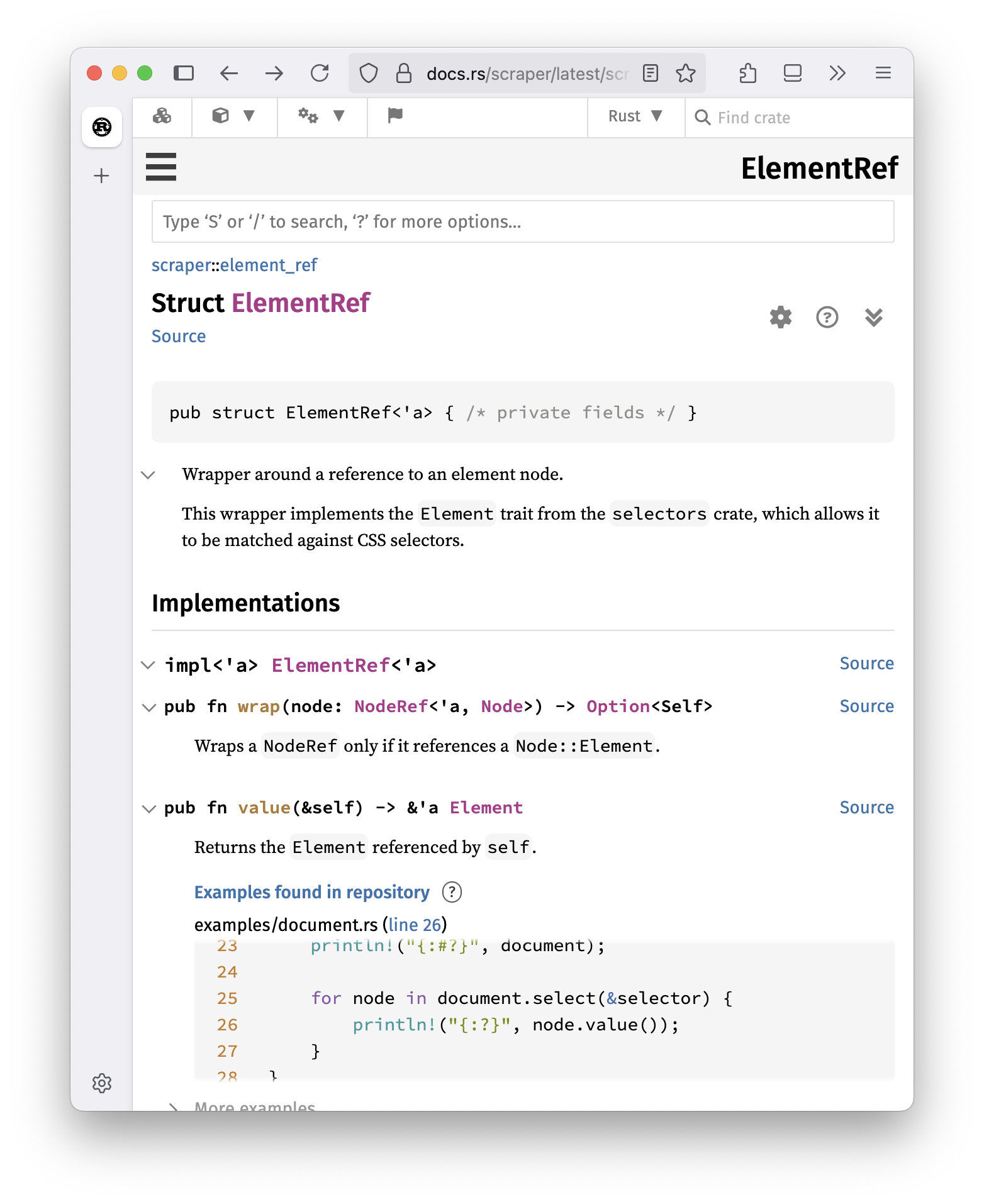
- Idiomatic Rust doesn't map cleanly to idiomatic Ruby, particularly when it comes to borrow-checked references
- This can be worked around through things like
Arcor by putting the logic in Ruby
class Document; end

class Element
  def initialize(document)
    @document = document # <= this is fine
  end

  def ancestor
    @document.ancestor(self)
  end
end
#[derive(Clone)]
#[magnus::wrap(class = "Sawzall::Document", free_immediately)]
struct Document(Arc<Mutex<Html>>);

impl Document {
    fn root_element(&self) -> Element {
        self.with_locked_html(|html| Element {
            id: html.root_element().id(),
            document: self.clone(),
        })
    }
}
impl Element {
    fn with_element_ref<U, F>(&self, f: F) -> U
    where
        F: FnOnce(ElementRef) -> U,
    {
        let html = self.document.0.lock().expect("failed to lock mutex");
        let element_ref = html
            .tree
            .get(self.id)
            .and_then(ElementRef::wrap)
            .expect("node with id {self.id} must be an element in the tree");

        f(element_ref)
    }
}
Testing
- Ruby testing with RSpec/Minitest/etc... works as you would expect with the only caveat being you have to
rake compilefirst. - Testing pure Rust code with
cargo testalso works as you would expected rb-sysprovides arb-sys-test-helperscrate to test Rust code that interacts with the Ruby VM (see oxidize-rb.github.io/rb-sys/testing.html)
Documentation options
Write YARD in Rust
YARD::Rustdocallows you to write YARD documentation in your Rust codeWrite YARD in Ruby
YARD's@!parseand@!methodtags let you document classes and methods that aren't defined in the source code (e.g. to support metaprogramming)- For extra credit, test your
tags withYARD::Doctest
GC / memory management considerations
- Rust data types that are wrapped and passed to Ruby have their
dropimplementation called when the GC runs. If your Rust data structures hold onto Ruby objects, you are responsible for providing the appropriate GC hooks so they aren't removed from under you.
See:
GVL considerations
- By default, Rust code is called with the GVL (Global VM Lock) acquired, which can become an issue when performing computationally-expensive work as no other Ruby code can progress in the meantime.
- In those scenarios it can be manually released
Cross-compilation
- For convenience, you may want to provide pre-built binaries for different Ruby versions and platforms.
The
Docsrb-sysgem provides arb-sys-dockcommand to make this easier using a set of Docker images.Shopify/blake3-rb/ is a good example of how to do this on GitHub Actions.
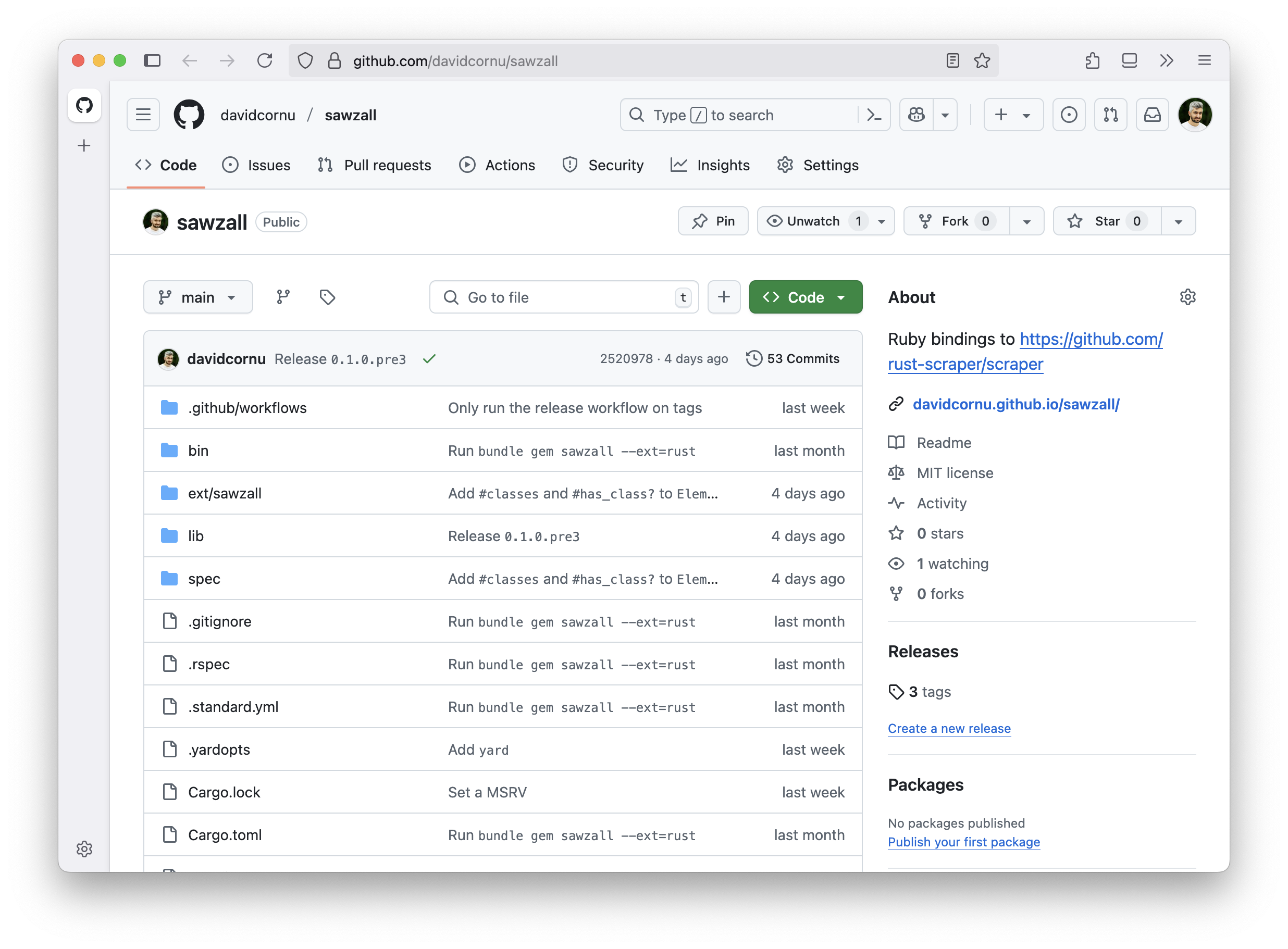
Basic example on davidcornu/sawzall